
Flying Ants vs Termites in Virginia: How to Tell the Difference
Every spring in Hanover and Mechanicsville, homeowners start seeing flying insects near windows and lights.
The first question is almost always:
“Are these flying ants… or termites?”
It’s an important distinction — because one is mostly a nuisance, and the other can cause structural damage.
Here’s how to tell the difference.
What Are Termite Swarmers?
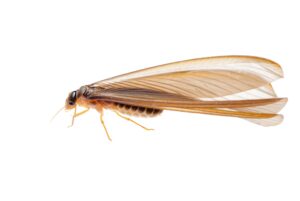
In Central Virginia, the most common termite species is the Eastern Subterranean Termite.
Swarmer termites are reproductive termites that emerge in spring — typically mid-March through May — to start new colonies.
If you see them indoors, a colony may already be nearby.
Termite Swarmer Identifiers
- Straight antennae
- Thick, uniform waist
- Two pairs of wings the same length
- Wings often shed near windows
What Are Flying Ants?
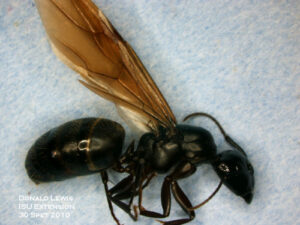
Flying ants are reproductive ants from existing colonies. They also swarm in spring and are commonly mistaken for termites.
Most flying ants in Virginia are nuisance pests, though carpenter ants can damage wood over time.
Flying Ant Identifiers
- Bent or elbowed antennae
- Narrow, pinched waist
- Front wings are longer than back wings
- More defined body segmentation
Quick Side-by-Side Comparison
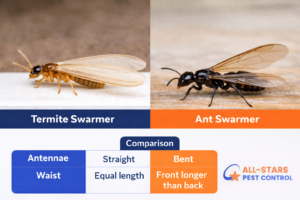
| Feature | Termites | Flying Ants |
|---|---|---|
| Antennae | Straight | Bent |
| Waist | Thick, uniform | Pinched |
| Wings | Equal length | Front longer than back |
| Body Shape | More uniform | Clearly segmented |
| Damage Risk | Potential structural damage | Usually nuisance (except carpenter ants) |
Why This Matters in Hanover & Mechanicsville
In Central Virginia, termite swarm season typically begins once temperatures consistently reach the 60s — often mid-March.
Seeing swarmers indoors can indicate:
- A nearby colony
- Possible activity inside walls or structural wood
- A mature termite population
Flying ants, on the other hand, are often seasonal and temporary.
The difference determines whether you’re dealing with a nuisance… or a structural issue.
What To Do If You’re Not Sure
If you find winged insects indoors:
- Check the antennae (straight vs. bent)
- Look at the waist (thick vs. pinched)
- Compare wing sizes (equal vs. uneven)
- Look for discarded wings near windows or lights
If you’re still unsure, a professional inspection can confirm the species quickly and help determine next steps.
Final Takeaway
Flying ants and termites look similar — especially to the untrained eye.
But the differences are clear when you know what to look for:
Straight antennae. Thick waist. Equal wings.
That’s termites.
If you’re in Hanover or Mechanicsville and seeing swarmers this spring, identifying them correctly is the first step.
About All-Stars Pest Control
All-Stars Pest Control provides professional termite inspections and preventative solutions for homeowners throughout Hanover County and the surrounding Richmond area.
If you suspect termite activity — or simply want reassurance before swarm season — schedule an inspection and protect your investment.