
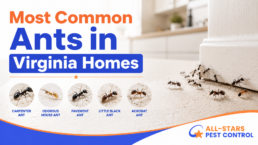
Most Common Ants in Virginia Homes
Most Common Ants in Virginia Homes
Seeing ants inside your home can be frustrating — especially when they seem to appear out of nowhere.
In areas like Mechanicsville and the greater Richmond region, ants are one of the most common pest issues homeowners deal with during the warmer months. But not all ants are the same, and knowing what type of ant you are dealing with can make a big difference in how the problem should be handled.
Why Ant Identification Matters
Many homeowners see ants and immediately reach for a spray. While that may kill the ants you see, it usually does not solve the real problem.
Different ant species behave differently. Some are looking for food. Some are attracted to moisture. Others may be nesting in wood or around the structure.
That is why proper identification is important before treatment begins.
1. Odorous House Ants
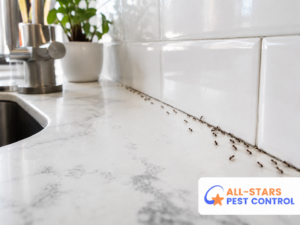 Odorous house ants are one of the most common ants found inside Virginia homes.
They are small, dark-colored ants that often show up in kitchens, bathrooms, and around sinks. They are commonly attracted to sweets, grease, crumbs, and moisture.
These ants get their name from the strong odor they can give off when crushed, often described as a rotten coconut-like smell.
Common signs:
- Trails along countertops, baseboards, or windowsills
- Activity around sinks and moisture areas
- Ants appearing after rain or weather changes
- Small dark ants showing up in large numbers
2. Pavement Ants
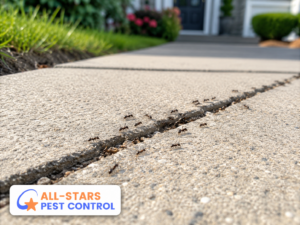 Pavement ants are another common ant species around homes, sidewalks, driveways, patios, and foundations.
They often nest under pavement, concrete slabs, stones, and along foundation areas. Once they find food inside, they may begin trailing into kitchens, pantries, or living spaces.
Common signs:
- Small ants near doors, garages, or foundation cracks
- Ant trails near sidewalks, patios, or driveways
- Small piles of soil near concrete edges
- Activity around pet food, crumbs, or pantry items
3. Carpenter Ants
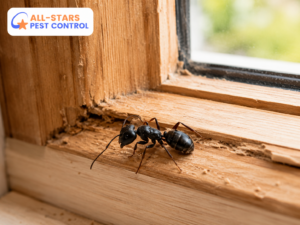 Carpenter ants are larger than many other household ants and can be a bigger concern for homeowners.
Unlike termites, carpenter ants do not eat wood. However, they can tunnel through damaged or moisture-softened wood to create nesting areas.
Because they are often associated with moisture issues, seeing carpenter ants inside should not be ignored.
Common signs:
- Larger black or dark-colored ants inside the home
- Activity near windows, doors, bathrooms, kitchens, or crawl spaces
- Small piles of sawdust-like material
- Ants appearing at night or in certain rooms repeatedly
4. Acrobat Ants
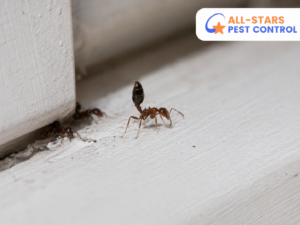 Acrobat ants are small ants that may nest in damp or damaged wood, wall voids, insulation, or around exterior areas of the home.
They get their name because they can raise their abdomen over their body when disturbed.
These ants are often associated with moisture, damaged wood, or areas where previous pest activity may have occurred.
Common signs:
- Small ants near windows, doors, or siding
- Activity around damp wood or moisture-prone areas
- Ants trailing along exterior walls or foundation areas
- Occasional activity inside wall voids or around trim
5. Little Black Ants
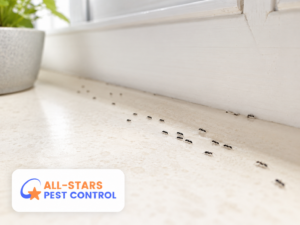 Little black ants are exactly what they sound like — very small, dark ants that can show up inside homes looking for food.
They may nest outside under rocks, mulch, logs, or landscaping, but they can enter homes when they find food sources indoors.
Common signs:
- Tiny black ants in kitchens or bathrooms
- Trails near crumbs, sweets, grease, or pet food
- Activity near windows, doors, or baseboards
- Ants appearing repeatedly even after cleaning
Where Ants Commonly Enter Homes
No matter the species, ants are small and can enter through tiny openings around the home.
Common entry points include:
- Cracks around windows and doors
- Gaps around utility lines
- Foundation cracks
- Garage door edges
- Crawl space vents and openings
- Areas where landscaping touches the home
Why Ant Problems Keep Coming Back
Ant problems often return because the colony is still active outside or hidden in a wall void, landscaping bed, crawl space, or moisture-prone area.
Spraying the ants you see may provide short-term relief, but it usually does not address the colony or the conditions attracting them.
That is why professional ant control focuses on identification, inspection, entry points, and targeted treatment.
How Homeowners Can Help Prevent Ants
There are a few simple steps that can help reduce ant activity around your home:
- Clean up crumbs and spills quickly
- Store food in sealed containers
- Keep pet food picked up when not in use
- Fix leaks and moisture issues
- Trim shrubs and branches away from the home
- Reduce heavy mulch buildup near the foundation
- Seal obvious cracks or gaps where ants may enter
Need Help Identifying Ants in Your Home?
If ants are showing up inside your home in Mechanicsville or the Richmond area, knowing what type of ant you are dealing with is the first step.
At All-Stars Pest Control, we help homeowners identify where ants are coming from and provide treatment options designed to control the problem at the source.
Don’t keep fighting the same ant problem over and over — let’s find out what’s really going on.

Why Are Ants Invading My Home Right Now?
Why Are Ants Invading My Home Right Now?
If ants suddenly show up in your kitchen, bathroom, or around windows and doors, you are not alone.
In areas like Mechanicsville and the greater Richmond region, ant activity often increases during the warmer months. As temperatures rise and moisture levels change, ants begin searching for food, water, and shelter — and unfortunately, your home can become the perfect target.
Why Ants Come Inside
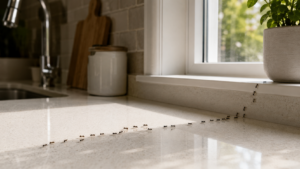 Ants usually enter homes for one of three reasons:
- Food — crumbs, spills, pet food, sugar, grease, and pantry items
- Water — sinks, bathrooms, leaky pipes, dishwashers, and damp areas
- Shelter — protection from heat, rain, dry weather, or changing outdoor conditions
Even a small food source or moisture issue can attract ants and lead to a steady trail inside.
Why Ants Seem to Appear Overnight
Many homeowners feel like ants show up out of nowhere. In reality, ants may have already been active outside around your foundation, mulch beds, walkways, or landscaping.
Once scout ants find food or water inside, they leave a scent trail for the rest of the colony to follow. That is why you may see just a few ants one day and a full trail the next.
Common Places Ants Enter Your Home
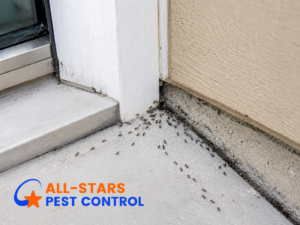 Ants are small and can enter through tiny openings around the structure.
Common entry points include:
- Cracks around windows and doors
- Gaps around utility lines
- Foundation cracks
- Garage door edges
- Areas where siding, brick, or trim meet
- Crawl space vents and openings
Because ants are so small, it does not take much of an opening for them to find a way inside.
Why DIY Ant Sprays Often Do Not Work
Most homeowners reach for an over-the-counter spray when they see ants. While sprays may kill the ants you see, they usually do not solve the colony problem.
In some cases, spraying can actually make the issue worse by causing certain ant colonies to split or relocate.
The key is identifying the ant species, finding the source, and using the right treatment strategy.
How to Help Prevent Ants Inside
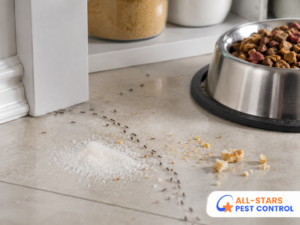 There are several steps homeowners can take to reduce ant activity:
- Wipe down counters and clean up spills quickly
- Store food in sealed containers
- Keep pet food picked up when not in use
- Empty trash regularly
- Fix moisture issues or leaks
- Trim branches and shrubs away from the home
- Reduce mulch buildup against the foundation
These steps can help, but if ants are already trailing inside, professional treatment may be needed to control the problem at the source.
When Should You Call a Professional?
You should consider calling a pest control professional if:
- You keep seeing ants after cleaning
- Ant trails return after spraying
- Ants are showing up in multiple rooms
- You see activity around windows, doors, or the foundation
- You are unsure what type of ant you are dealing with
A proper inspection can help determine where the ants are coming from and what treatment approach makes the most sense.
Stop Ants Before They Take Over
If ants are invading your home in Mechanicsville or the Richmond area, there is usually a reason behind it.
At All-Stars Pest Control, we help homeowners identify the source of ant problems and provide treatment options designed to control ants where they are coming from — not just the ones you see on the counter.
Don’t wait for a few ants to become a bigger problem. Get ahead of them early.

What’s Included in a Yard Guard Program?
If mosquitoes, fleas, or ticks are making it harder to enjoy your yard, a professional Yard Guard program may be exactly what your home needs.
In areas like Mechanicsville and the greater Richmond region, outdoor pests become a major problem during the warmer months. Mosquitoes can make evenings outside miserable, ticks can hide in grass and shaded areas, and fleas can affect pets before homeowners even realize there is a problem.
That’s where a consistent Yard Guard program can make a big difference.
What Is a Yard Guard Program?
A Yard Guard program is an outdoor pest control service designed to help reduce mosquitoes, fleas, and ticks around your yard.
Instead of waiting until these pests become a major issue, the goal is to stay ahead of them with regular treatments throughout the season.
At All-Stars Pest Control, our Yard Guard program focuses on the areas where outdoor pests are most likely to rest, breed, and travel.
What Pests Does Yard Guard Help Control?
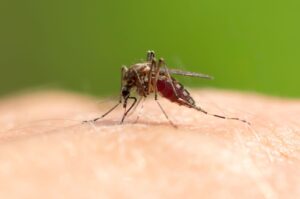 Our Yard Guard program is designed to help with three major outdoor pests:
- Mosquitoes — commonly found around shaded areas, vegetation, and standing water
- Fleas — often found in shaded soil, under decks, mulch beds, and areas where pets spend time
- Ticks — commonly found along fence lines, tall grass, wooded edges, and dense vegetation
These pests are common throughout Virginia and can quickly become frustrating for homeowners who enjoy spending time outside.
What Areas Are Treated?
 Every property is different, but Yard Guard treatments typically focus on key outdoor areas where mosquitoes, fleas, and ticks are most likely to be active.
Common treatment areas may include:
- Bushes and shrubs
- Fence lines
- Mulch beds
- Shaded areas
- Areas under decks or porches
- Perimeter zones around the yard
- Areas where pets and family members spend time outdoors
The goal is to target the areas where these pests are most likely to live and rest during the day.
Why Consistency Matters
One-time treatments may help temporarily, but mosquitoes, fleas, and ticks can continue to reproduce and re-enter your yard throughout the season.
That’s why consistency is so important.
A recurring Yard Guard program helps:
- Reduce pest populations over time
- Interrupt breeding and activity cycles
- Maintain protection during peak pest season
- Keep your outdoor space more comfortable
For most Virginia homes, outdoor pest pressure builds from spring through early fall, which is why regular seasonal treatments are recommended.
When Should Yard Guard Treatments Start?
In Central Virginia, mosquito, flea, and tick activity can begin earlier than many homeowners expect.
As temperatures warm up in spring, these pests become more active. Starting early helps prevent populations from building before they become a bigger problem.
For best results, homeowners should consider starting Yard Guard treatments before outdoor pests are already out of control.
Is Yard Guard Worth It?
If you enjoy spending time outside, have pets, have kids, or like hosting family and friends, a Yard Guard program can be a valuable part of protecting your outdoor space.
It’s not just about reducing bugs — it’s about being able to enjoy your yard again.
Yard Guard can help make outdoor spaces more comfortable for:
- Backyard cookouts
- Kids playing outside
- Pets spending time in the yard
- Evenings on the patio
- Family gatherings
What Can Homeowners Do Between Treatments?
Professional treatments work best when homeowners also help reduce conditions that attract outdoor pests.
Helpful steps include:
- Empty standing water from buckets, toys, planters, and bird baths
- Keep grass cut short
- Trim bushes and vegetation
- Remove leaf litter and yard debris
- Keep gutters clean and draining properly
- Limit clutter where water can collect
These steps help make your yard less attractive to mosquitoes, fleas, and ticks.
Protect Your Yard This Season
 If mosquitoes, fleas, or ticks are keeping you from enjoying your yard, it may be time to consider a Yard Guard program.
At All-Stars Pest Control, we help homeowners in Mechanicsville and the greater Richmond area protect their outdoor spaces with consistent seasonal treatments.
Don’t wait until your yard becomes uncomfortable — get ahead of outdoor pests before they take over.
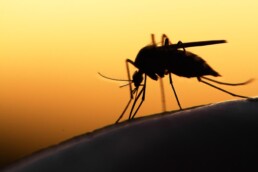
Are Mosquito Treatments Worth It in Virginia?
Are Mosquito Treatments Worth It in Virginia?
 If you’ve ever tried to enjoy your backyard during a Virginia summer, you’ve probably asked yourself: are mosquito treatments actually worth it?
In areas like Mechanicsville and the greater Richmond region, mosquito activity can quickly turn outdoor spaces into something you avoid instead of enjoy. The real question isn’t just whether treatments work — it’s whether they’re worth it for your home and lifestyle.
Why Mosquitoes Are Such a Problem in Virginia
Virginia’s climate creates the perfect environment for mosquitoes:
- Warm temperatures from spring through early fall
- Frequent rain and humidity
- Plenty of shaded areas and standing water
Once temperatures rise, mosquito populations can grow rapidly — especially if they’re not controlled early.
What Do Professional Mosquito Treatments Do?
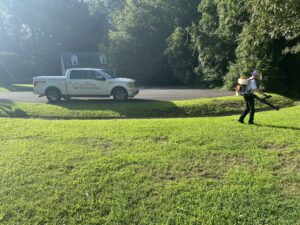
Professional mosquito treatments are designed to reduce and control mosquito populations around your property.
These treatments typically target:
- Resting areas like shrubs, bushes, and shaded zones
- Breeding areas where mosquitoes reproduce
- Perimeter zones around your yard
With consistent treatments, mosquito populations can be significantly reduced throughout the season.
Are Mosquito Treatments Worth It for Homeowners?
For many homeowners, the answer is yes — especially if you spend time outdoors.
Mosquito control can help you:
- Enjoy your yard without constant bites
- Make outdoor spaces usable again
- Host gatherings, cookouts, and family time comfortably
- Reduce exposure to mosquito-borne concerns
If your goal is to actually use your yard during the warmer months, treatments can make a noticeable difference.
What About DIY Mosquito Control?
There are many DIY options available, from sprays to citronella products. While these can help temporarily, they often don’t provide consistent or long-term results.
Mosquitoes reproduce quickly, and without a structured approach, populations tend to rebound fast.
Professional programs focus on consistency and coverage, which is key to keeping mosquito levels low over time.
When Should You Start Mosquito Treatments?
The best time to start mosquito treatments in Virginia is early in the season — typically March through April — before populations build.
Waiting until mosquitoes are already a problem often means you’re playing catch-up.
Is a Mosquito Program Worth It for Your Home?
It comes down to how you use your outdoor space.
If you enjoy spending time outside, have kids or pets, or like hosting friends and family, a mosquito control program can make a big difference in your day-to-day comfort.
For homeowners in Mechanicsville and the Richmond area, staying ahead of mosquito season is key to enjoying your yard all summer long.
Take Back Your Backyard
At All-Stars Pest Control, our Yard Guard program is designed to keep mosquito populations under control so you can enjoy your outdoor space again.
If mosquitoes are keeping you inside, it may be time to take back your yard.
Flying Ants vs Termites in Virginia: How to Tell the Difference
Flying Ants vs Termites in Virginia: How to Tell the Difference
Every spring in Hanover and Mechanicsville, homeowners start seeing flying insects near windows and lights.
The first question is almost always:
“Are these flying ants… or termites?”
It’s an important distinction — because one is mostly a nuisance, and the other can cause structural damage.
Here’s how to tell the difference.
What Are Termite Swarmers?
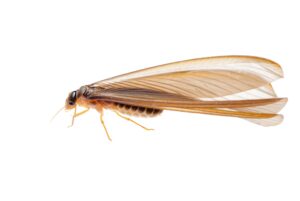
In Central Virginia, the most common termite species is the Eastern Subterranean Termite.
Swarmer termites are reproductive termites that emerge in spring — typically mid-March through May — to start new colonies.
If you see them indoors, a colony may already be nearby.
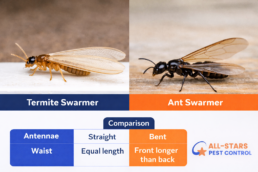
Termite Swarmer Identifiers
- Straight antennae
- Thick, uniform waist
- Two pairs of wings the same length
- Wings often shed near windows
What Are Flying Ants?
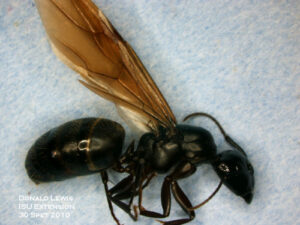
Flying ants are reproductive ants from existing colonies. They also swarm in spring and are commonly mistaken for termites.
Most flying ants in Virginia are nuisance pests, though carpenter ants can damage wood over time.
Flying Ant Identifiers
- Bent or elbowed antennae
- Narrow, pinched waist
- Front wings are longer than back wings
- More defined body segmentation
Quick Side-by-Side Comparison
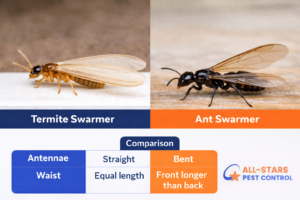
| Feature | Termites | Flying Ants |
|---|---|---|
| Antennae | Straight | Bent |
| Waist | Thick, uniform | Pinched |
| Wings | Equal length | Front longer than back |
| Body Shape | More uniform | Clearly segmented |
| Damage Risk | Potential structural damage | Usually nuisance (except carpenter ants) |
Why This Matters in Hanover & Mechanicsville
In Central Virginia, termite swarm season typically begins once temperatures consistently reach the 60s — often mid-March.
Seeing swarmers indoors can indicate:
- A nearby colony
- Possible activity inside walls or structural wood
- A mature termite population
Flying ants, on the other hand, are often seasonal and temporary.
The difference determines whether you’re dealing with a nuisance… or a structural issue.
What To Do If You’re Not Sure
If you find winged insects indoors:
- Check the antennae (straight vs. bent)
- Look at the waist (thick vs. pinched)
- Compare wing sizes (equal vs. uneven)
- Look for discarded wings near windows or lights
If you’re still unsure, a professional inspection can confirm the species quickly and help determine next steps.
Final Takeaway
Flying ants and termites look similar — especially to the untrained eye.
But the differences are clear when you know what to look for:
Straight antennae. Thick waist. Equal wings.
That’s termites.
If you’re in Hanover or Mechanicsville and seeing swarmers this spring, identifying them correctly is the first step.
About All-Stars Pest Control
All-Stars Pest Control provides professional termite inspections and preventative solutions for homeowners throughout Hanover County and the surrounding Richmond area.
If you suspect termite activity — or simply want reassurance before swarm season — schedule an inspection and protect your investment.
Signs of Termite Damage Homeowners Miss Before Swarm Season in Virginia
Signs of Termite Damage Homeowners Miss (Before Swarm Season in Virginia)
Most homeowners wait until they see swarmers to think about termites.
By then, the colony has often been active for months — sometimes years.
In Hanover County and throughout Mechanicsville, swarm season typically begins in mid-March. But damage usually starts long before that.
Here are the subtle warning signs many homeowners overlook.
1. Mud Tubes Along the Foundation
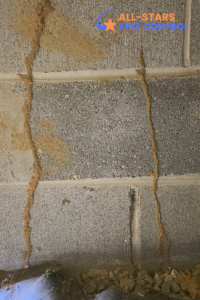
Subterranean termites build mud tubes to:
- Protect themselves from dry air
- Travel between soil and wood
- Maintain moisture
Homeowners often miss these because they’re hidden in crawl spaces, blend into foundation walls, or get mistaken for dried dirt.
If you see pencil-width tubes climbing your foundation, it’s not random debris.
2. Wood That Sounds Hollow
Termites eat wood from the inside out. That means the surface can look normal while the interior structure is compromised.
Common areas this shows up:
- Door frames
- Window sills
- Baseboards
- Sill plates in crawl spaces
Try tapping lightly on trim or framing. If it sounds hollow, papery, or unusually thin, it deserves a closer look.
3. Doors and Windows That Suddenly Stick
Homeowners often blame humidity, but termite activity can contribute to:
- Warping
- Internal structural weakening
- Subtle shifting in framing
If a door that once closed smoothly suddenly sticks, it’s worth investigating — especially in older homes throughout Hanover.
4. Bubbling or Blistering Paint
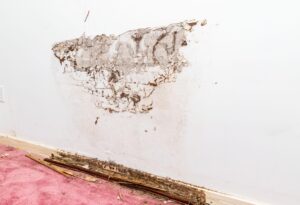
This is frequently confused with water damage. But termites tunneling close to drywall surfaces can cause:
- Paint to bubble or blister
- Walls to appear uneven
- Small pinholes in drywall
It’s subtle — but it’s one of the most commonly missed signs before swarm season.
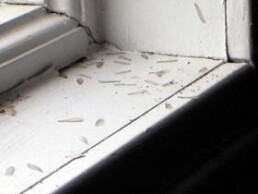
5. Discarded Wings Near Windows
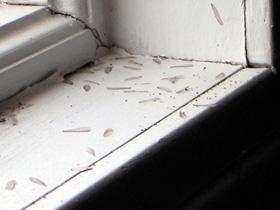
In early spring, termite swarmers shed their wings after mating. Homeowners often sweep them up without thinking.
Finding small, translucent wings near:
- Windows
- Light fixtures
- Entry doors
…can indicate a nearby colony — even if you never actually see the swarm.
Why Damage Is Often Missed Before March
In Central Virginia:
- Winter activity continues below the frost line
- Colonies can remain active inside heated homes
- Swarmers are not visible yet
That means February and early March are often “quiet damage” months.
By the time swarmers appear, feeding may already have occurred.
Hanover & Mechanicsville Homeowners: Why Timing Matters
Once daytime temperatures consistently reach the 60s, swarm season can begin quickly in this region.
Late winter inspections help homeowners:
- Identify activity early
- Install monitoring systems
- Address moisture in crawl spaces
- Avoid emergency treatment during peak season
Final Takeaway
Termite damage is rarely dramatic at first.
It’s subtle. Quiet. Hidden.
Mud tubes. Hollow wood. Tight doors. Bubbling paint. Discarded wings.
These are the warning signs homeowners miss — right before swarm season begins.
If you’re unsure, a professional inspection provides clarity before activity becomes visible in spring.
About All-Stars Pest Control
All-Stars Pest Control provides professional termite inspections and preventative solutions for homeowners throughout Hanover County and the surrounding Richmond area.
If you suspect activity — or simply want reassurance before swarm season — schedule an inspection and protect your investment.
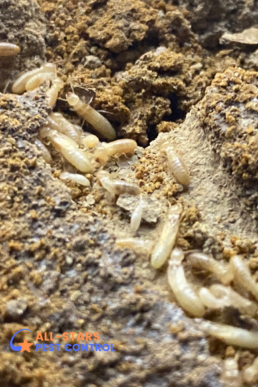
Are Termites Active in Winter in Virginia?
Are Termites Active in Winter in Virginia? What Hanover Homeowners Need to Know
Short answer: Yes — but not the way most people think.
Many homeowners assume termites “die off” or “hibernate” once temperatures drop. In reality, termites can remain active year-round — they just operate differently in colder months.
Understanding winter termite behavior can help you prevent serious structural damage before spring swarming season begins.
The Most Common Termite in Virginia: Eastern Subterranean Termite
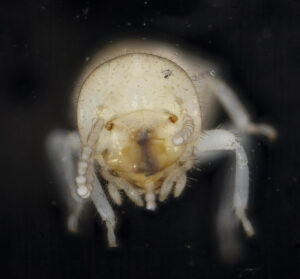
In Hanover County and the greater Richmond area, the primary species we deal with is the Eastern Subterranean Termite.
These termites live underground and build colonies in the soil. Unlike drywood termites found in some southern coastal states, subterranean termites rely on moisture and soil contact to survive.
What Happens to Termites in Winter?
Termites do not hibernate.
Instead, in cold weather, they often:
- Move deeper into the soil below the frost line
- Remain active inside heated structures
- Continue feeding on wood around the clock
When outside soil temperatures drop, termite colonies typically retreat further underground where temperatures stay more stable.
If termites have already established themselves near your home’s foundation, they can continue feeding inside wall voids, crawl spaces, and sill plates — completely out of sight.
Why Winter Can Be Deceptive
Winter is often when infestations can go unnoticed the longest.
There are usually:
- No swarmers flying
- No obvious activity outside
- No clear warning signs
But inside walls and structural wood, activity may still be happening.
By the time spring swarmers appear, the colony may have already been feeding for months.
Where Winter Termite Activity Typically Occurs
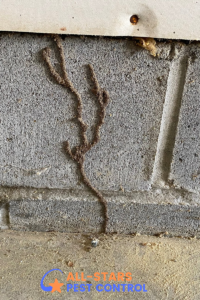
In the winter months, termite activity is most commonly found in:
- Crawl spaces
- Basement walls
- Foundation expansion joints
- Sill plates
- Wood-to-soil contact areas
- Behind insulation
Because homes are heated, they provide a stable environment for termites to continue feeding.
Do Termites Survive Freezing Temperatures?
Yes — colonies survive winter by:
- Moving below the frost line
- Using mud tubes to retain moisture and regulate temperature
- Staying inside heated structures
While individual termites are vulnerable to extreme cold, the colony as a whole is protected underground. Freezing air temperatures do not eliminate termite problems.
When Does Termite Season Start in Virginia?

In Central Virginia, swarm season typically begins:
Mid-March through May
Warm days following heavy spring rains often trigger swarming activity.
But here’s the key: Swarming is not the beginning of an infestation — it’s evidence the colony has already matured.
Winter Warning Signs to Watch For
Even in February, homeowners should look for:
- Mud tubes on foundation walls
- Soft or blistering wood
- Buckling floors
- Tight-fitting doors or windows
- Hollow-sounding trim
If you see any of these signs during winter, activity may already be established.
Why Late Winter Is the Smartest Time for Inspection
From a preventative standpoint, February and early March are ideal for:
- Annual termite inspections
- Installing monitoring systems
- Addressing moisture issues in crawl spaces
- Sealing foundation penetrations
Waiting until swarmers appear means you’re reacting — not preventing.
Final Word for Hanover & Mechanicsville Homeowners
Termites are not a “spring-only” issue.
They can be active year-round — especially inside heated homes.
Winter is quiet. Spring is visible. Damage can happen in both.
If you’re unsure about the condition of your home, a professional inspection can provide peace of mind before swarm season begins.
Local Note
In Mechanicsville and Hanover County, termite activity often increases rapidly once consistent daytime temperatures reach the 60s.
With spring only weeks away, now is the time to make sure your home isn’t already supporting a hidden colony.
About All-Stars Pest Control
All-Stars Pest Control provides professional termite inspections and preventative solutions for homeowners throughout Hanover County and the surrounding Richmond area.
If you suspect activity — or simply want reassurance before swarm season — schedule an inspection and protect your investment.